Substantial Pair of Antique Composition Stone Gate Pier Eagles – Attributed to Austin & Seeley
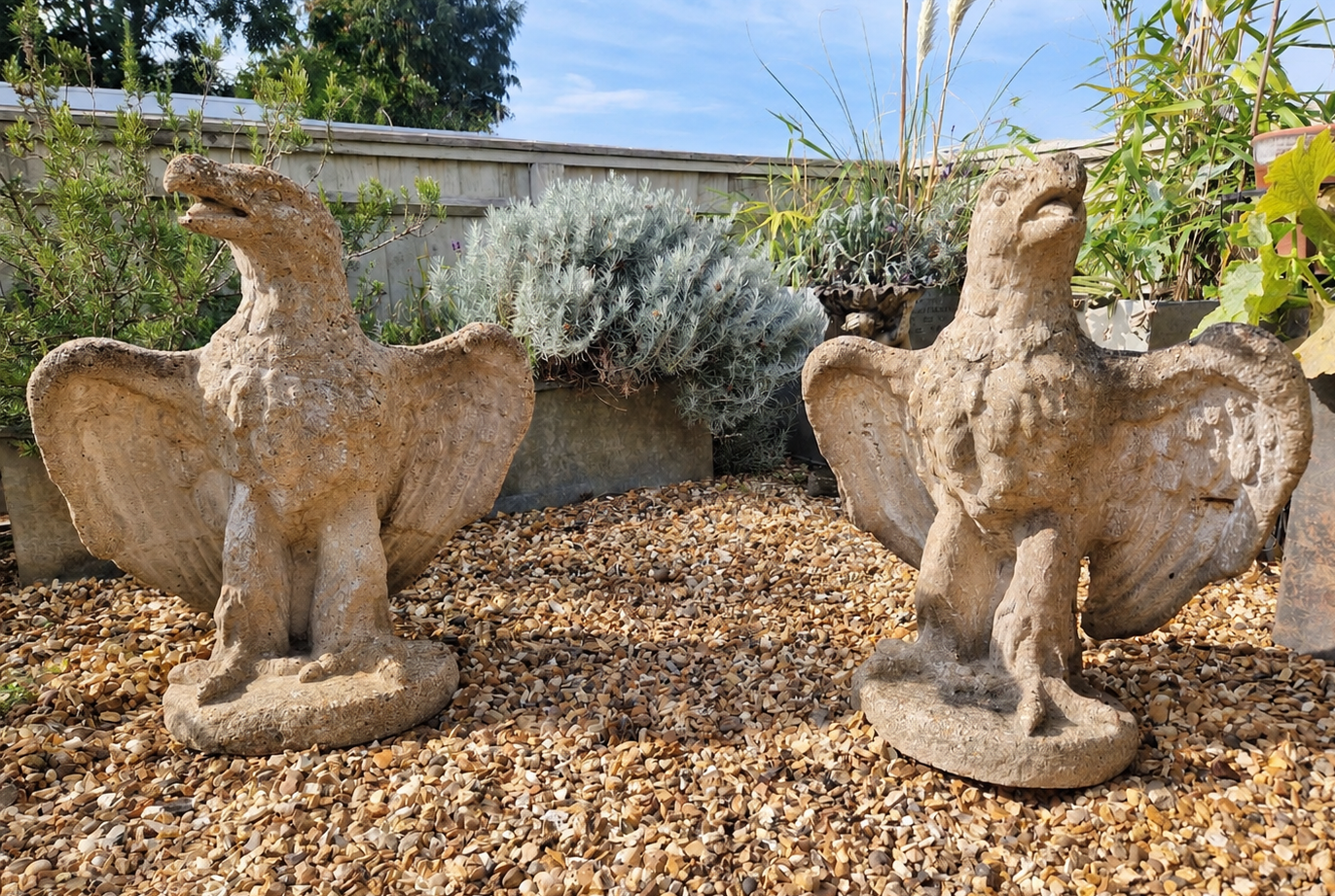
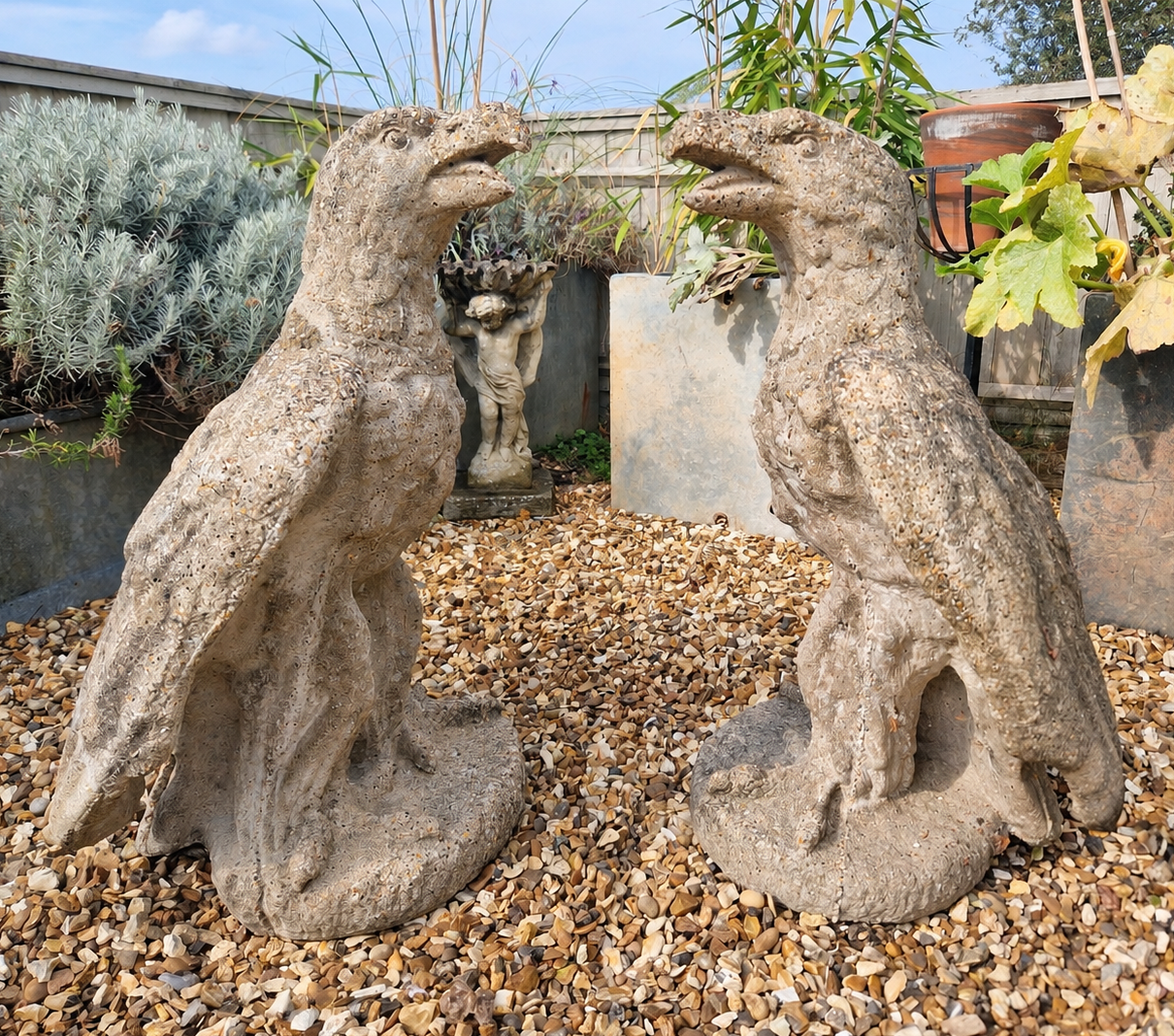
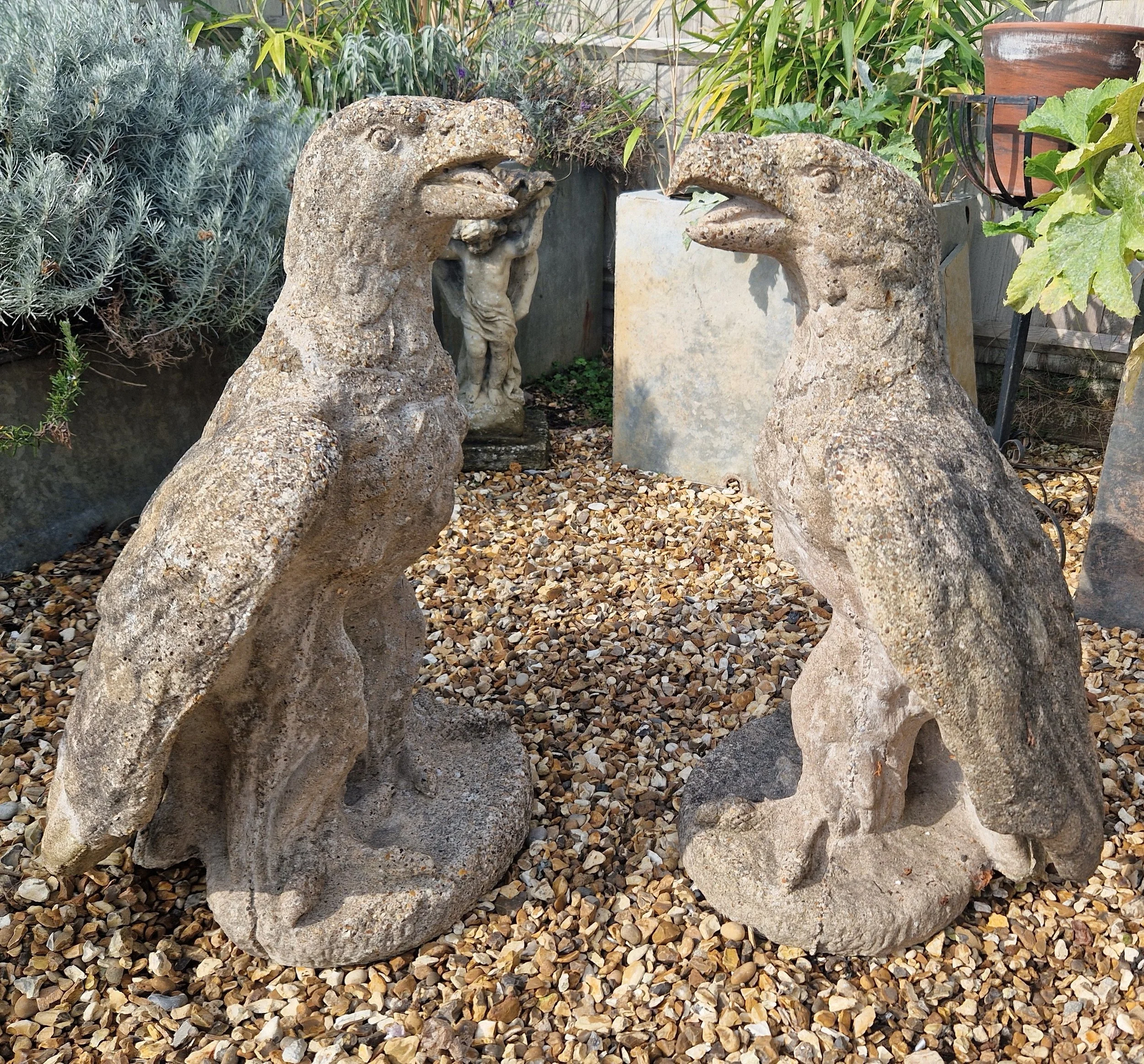
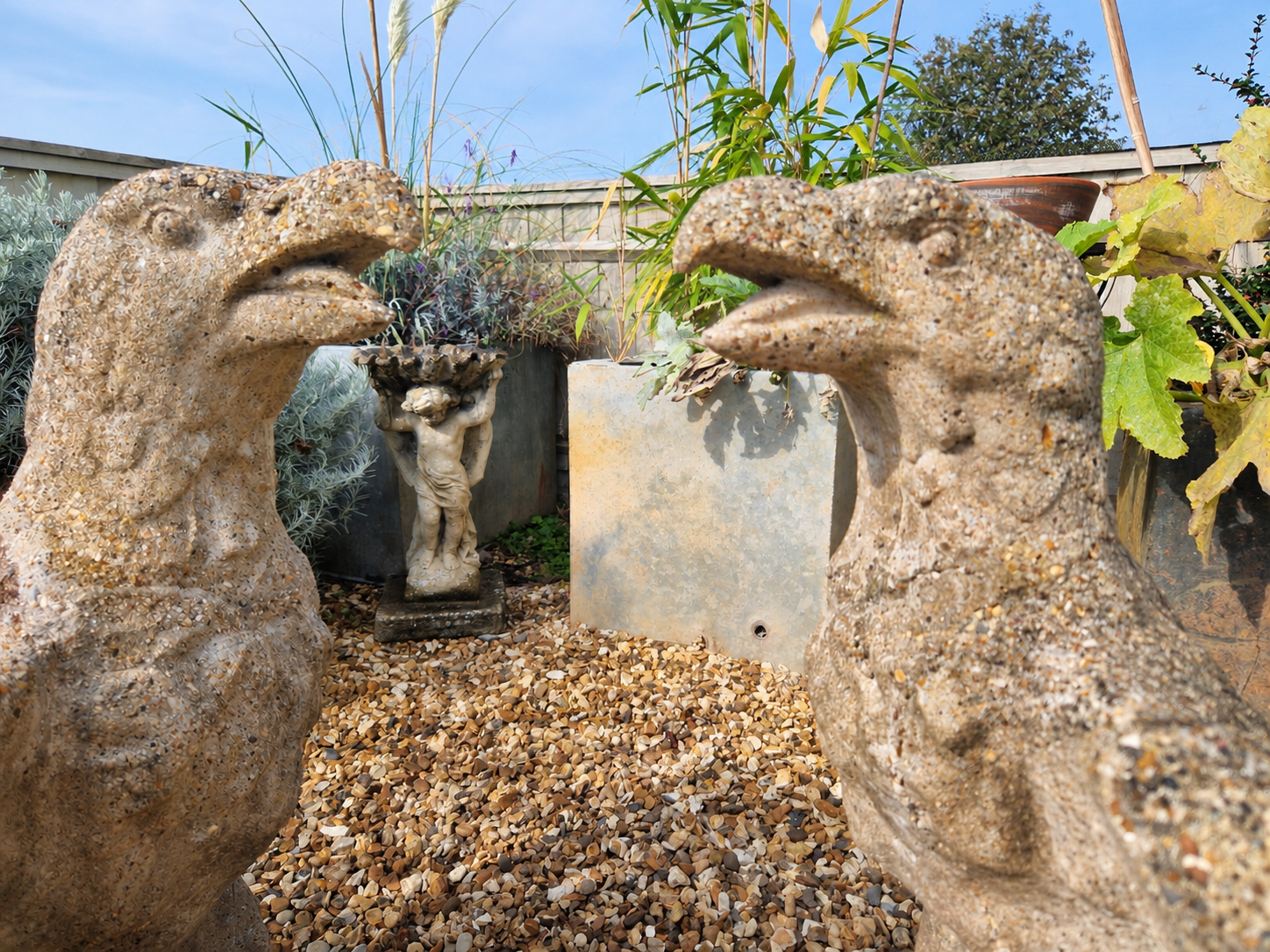
Substantial Pair of Antique Composition Stone Gate Pier Eagles – Attributed to Austin & Seeley
English, mid to late 19th century
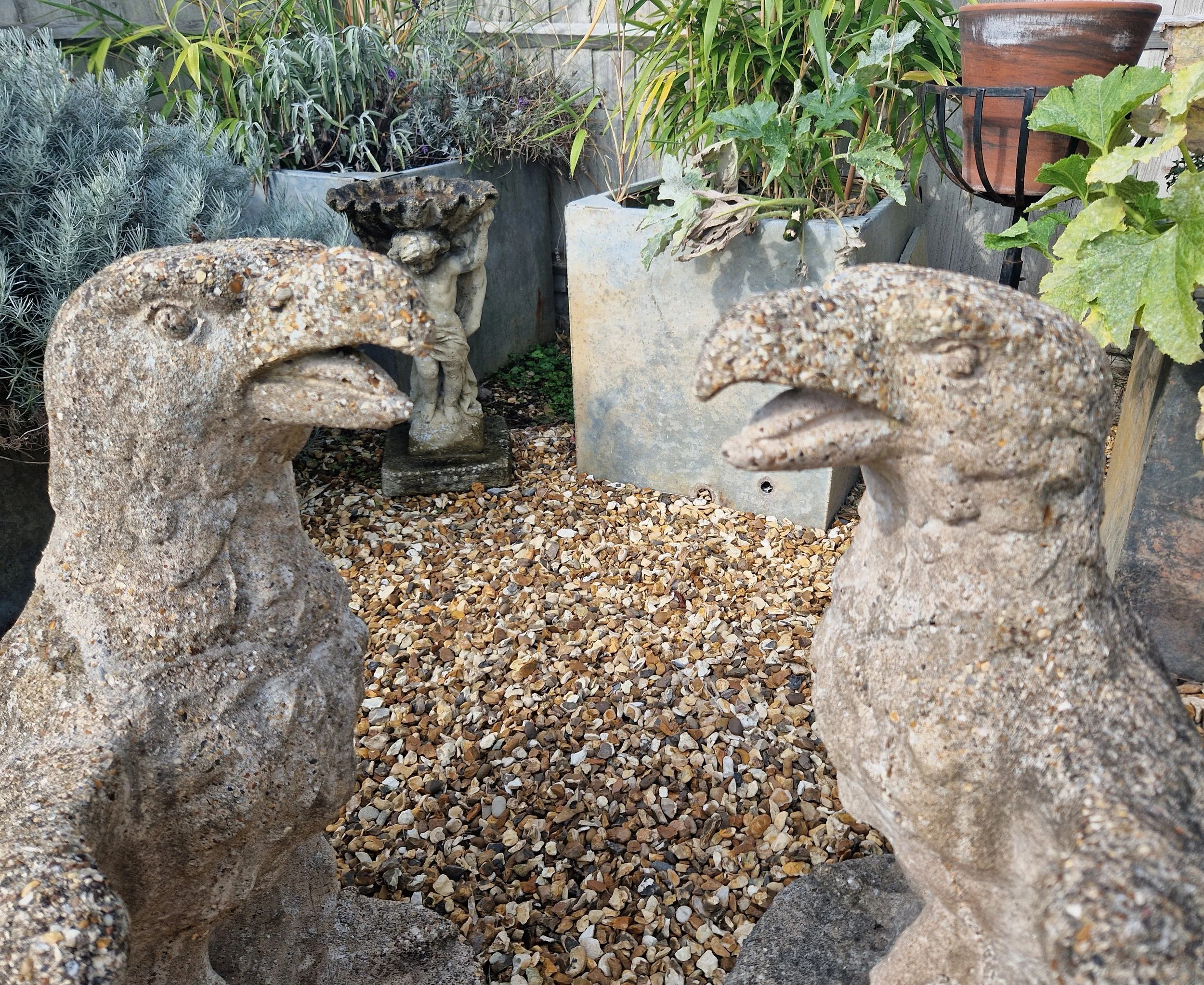
An impressive and increasingly difficult-to-find pair of antique English composition stone eagles, attributed on stylistic grounds to the celebrated London makers Austin & Seeley, renowned for their architectural ornaments and artificial stone garden statuary during the 19th century.
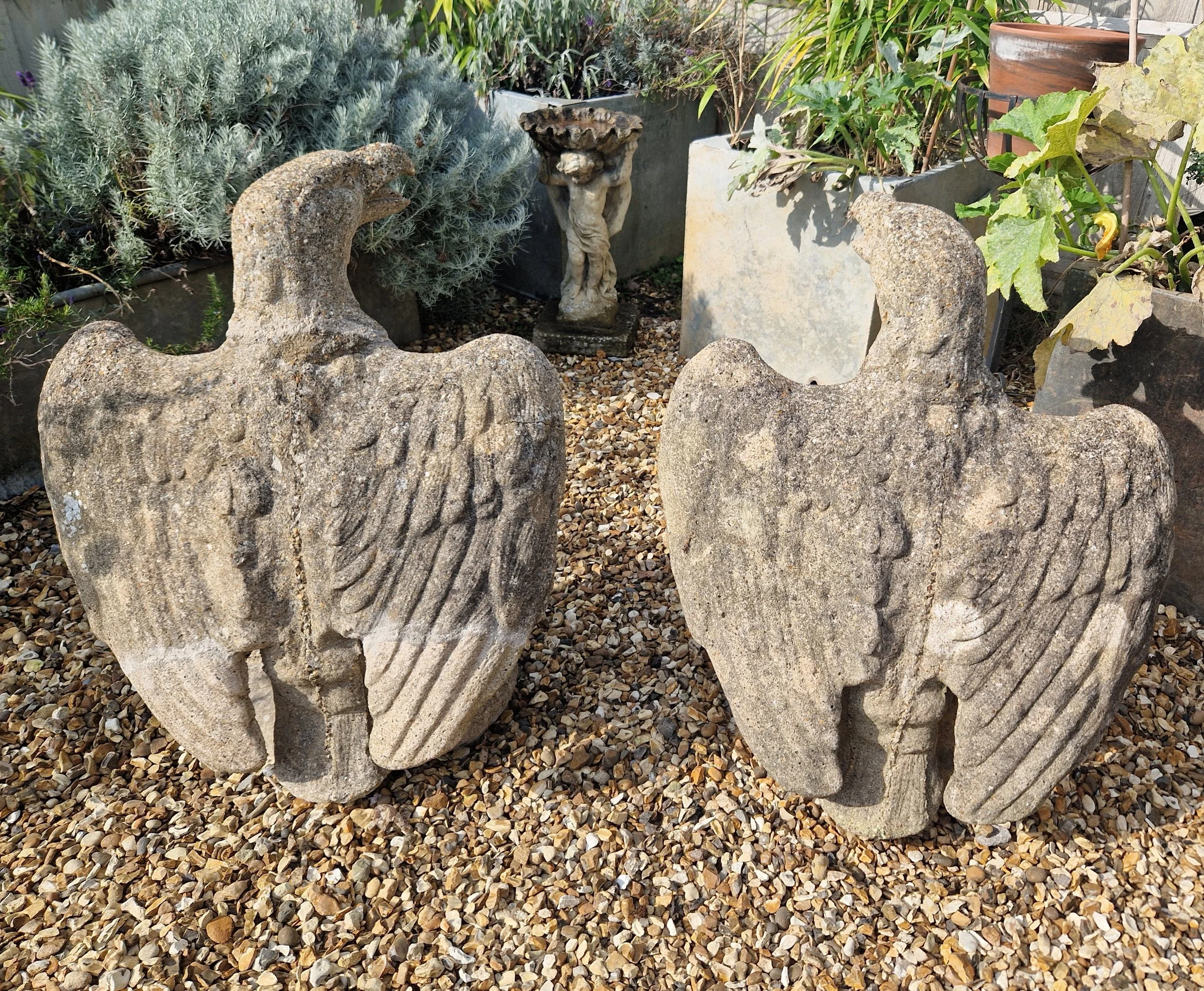
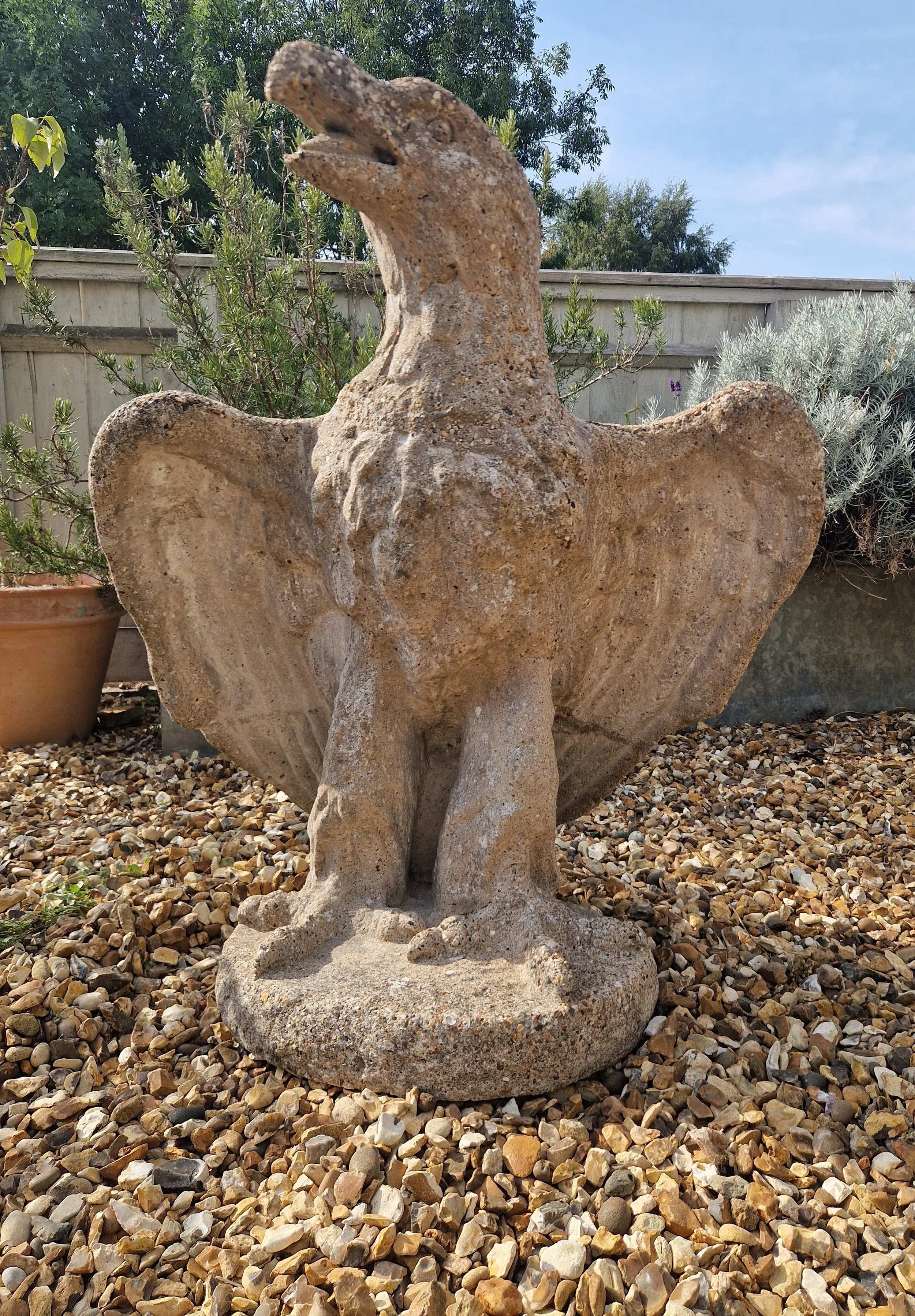
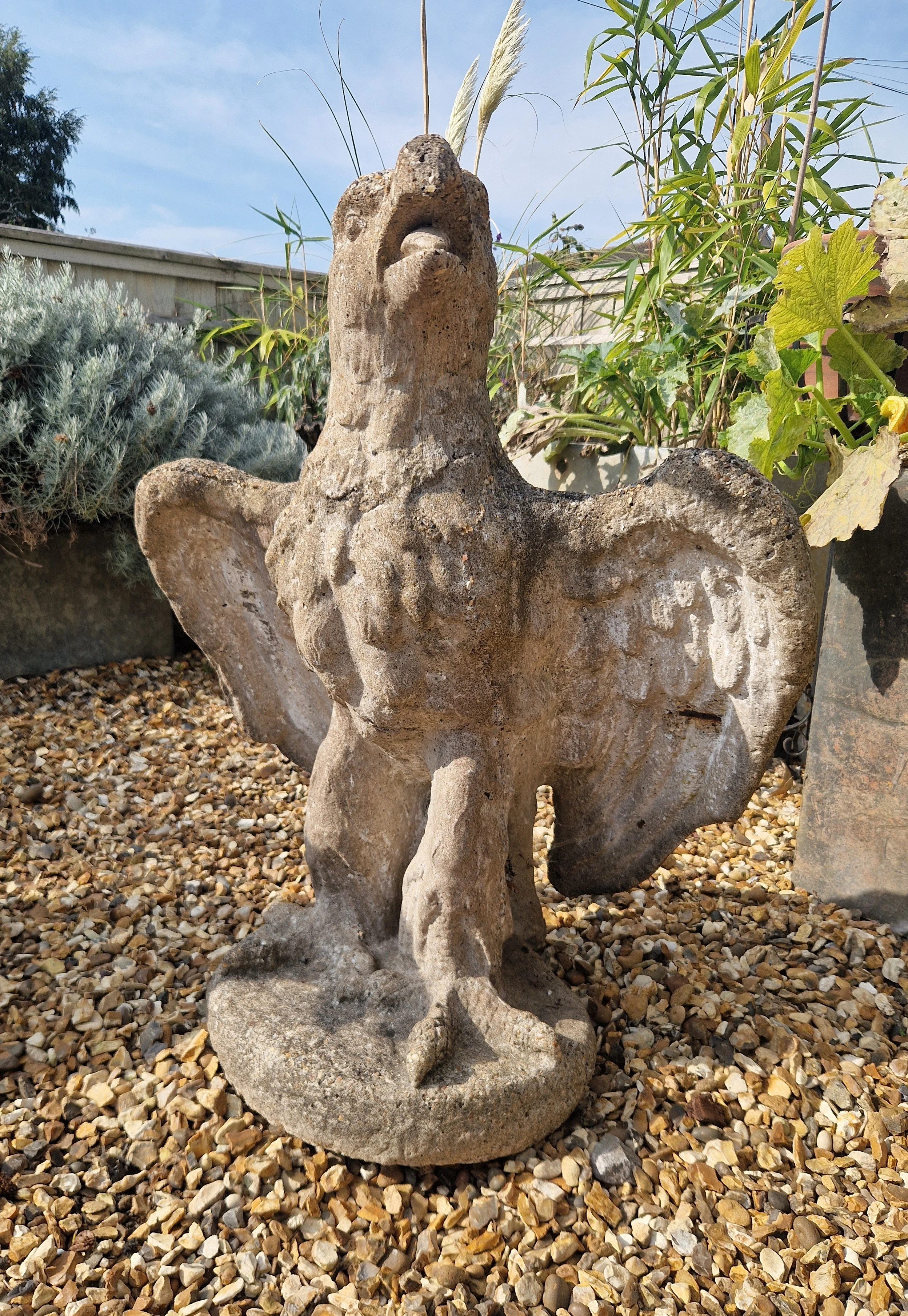
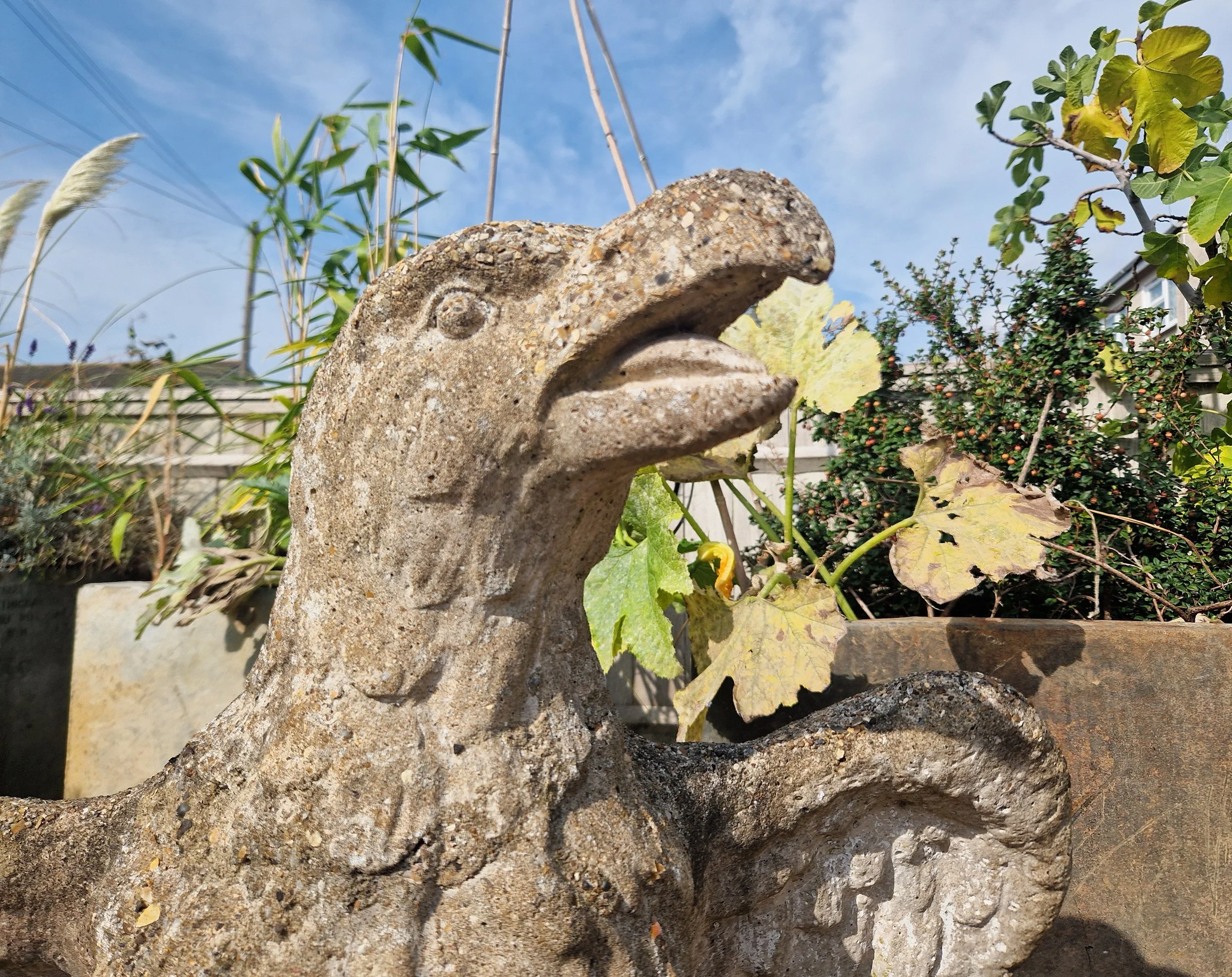
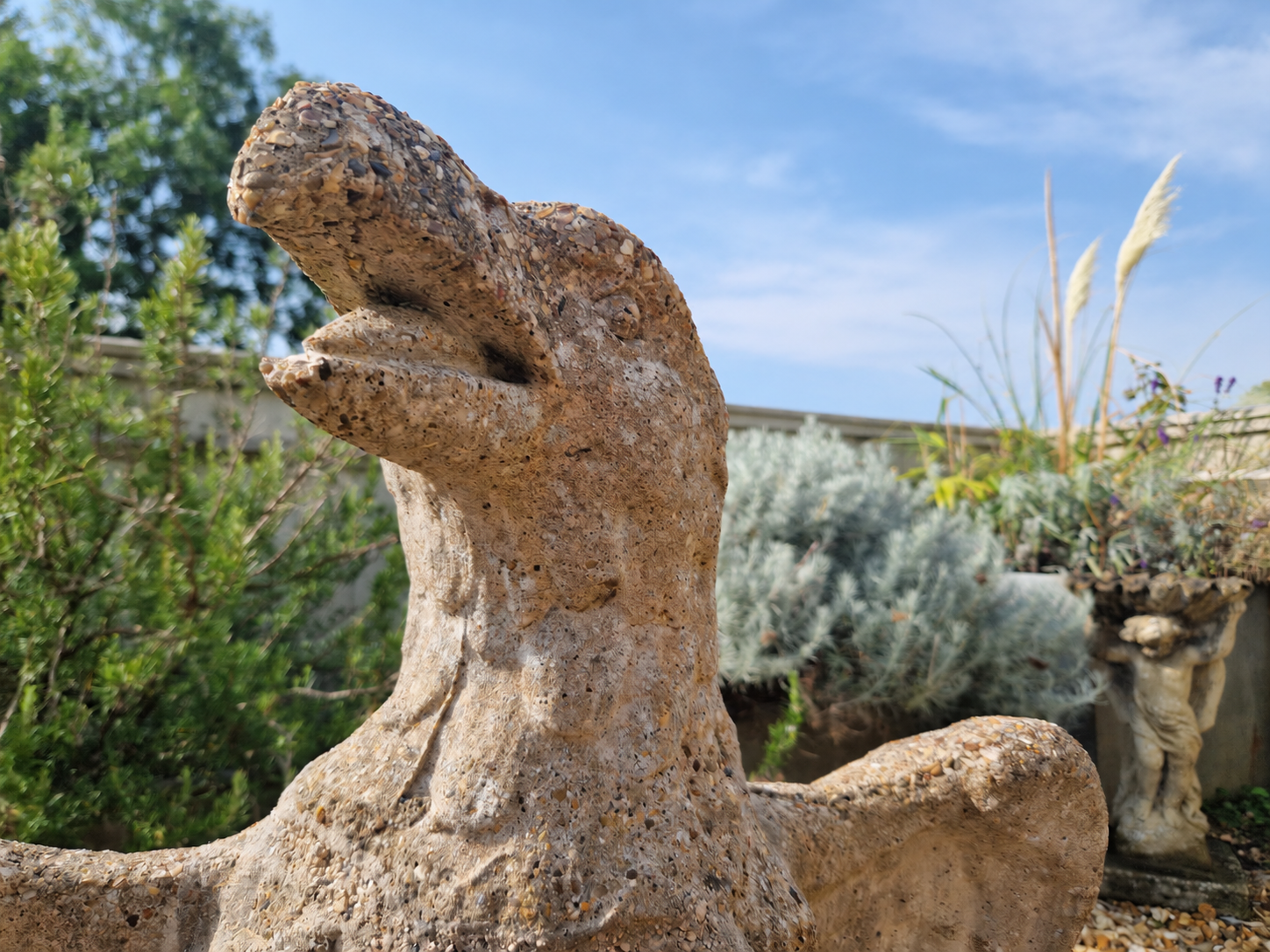
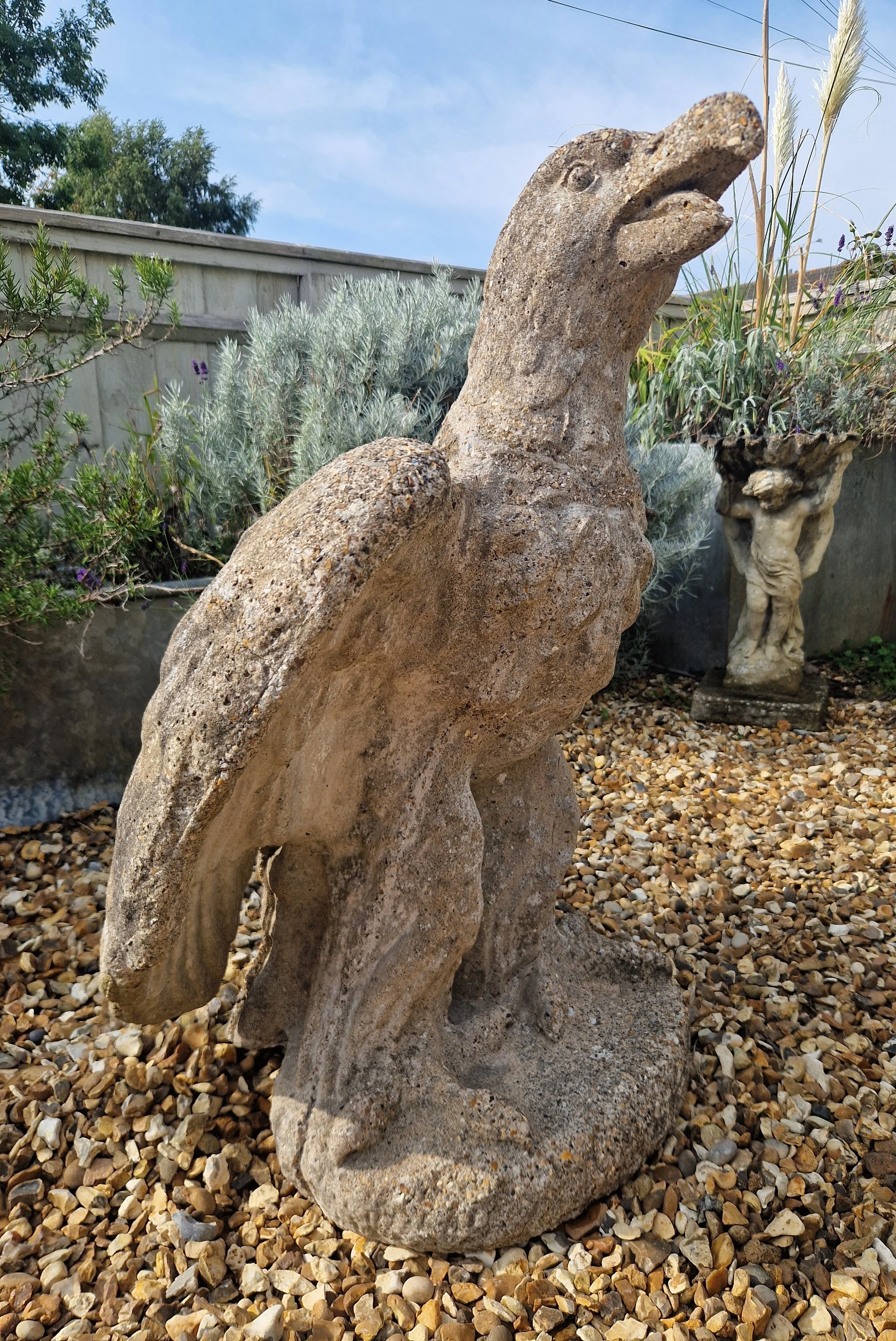
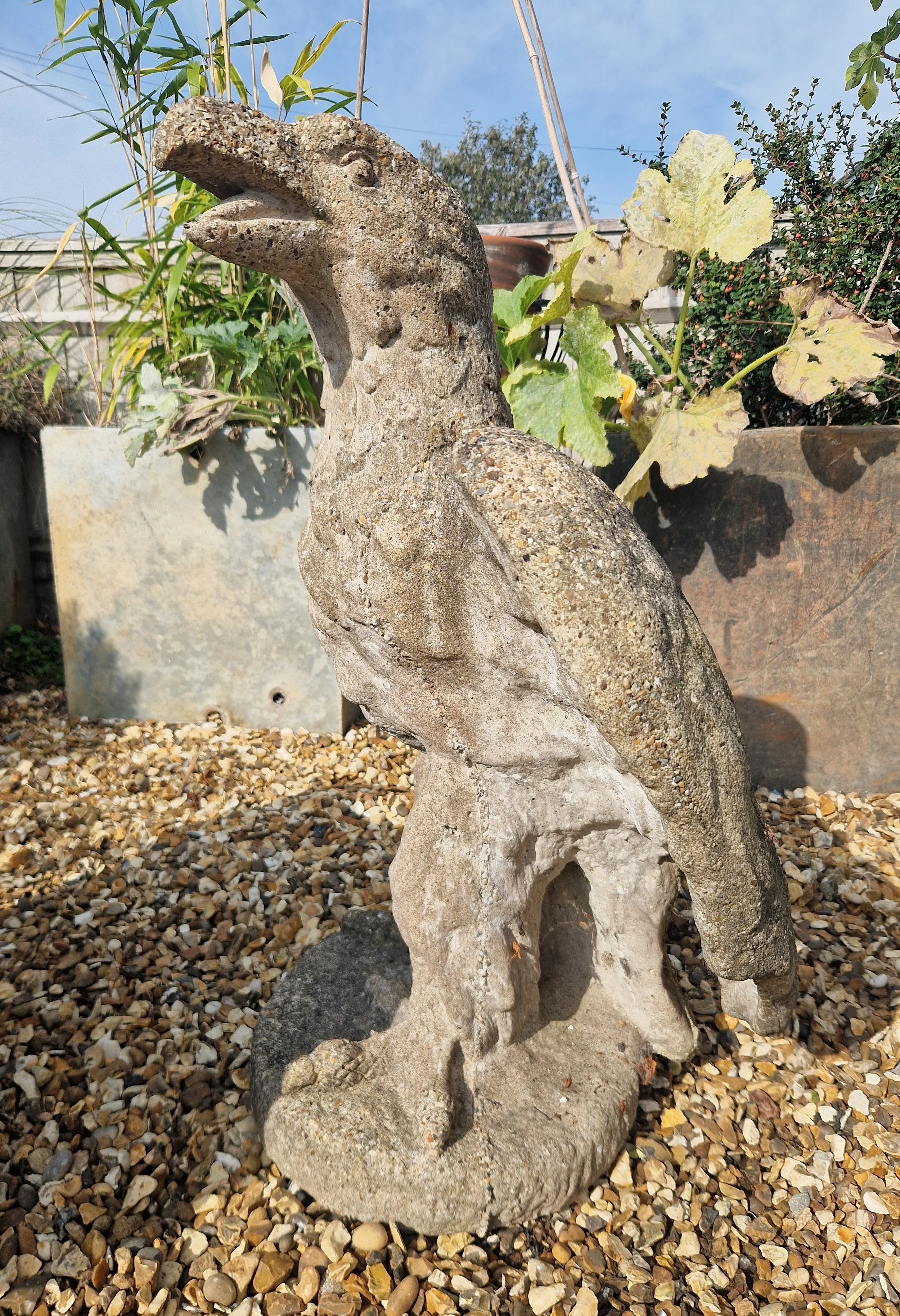
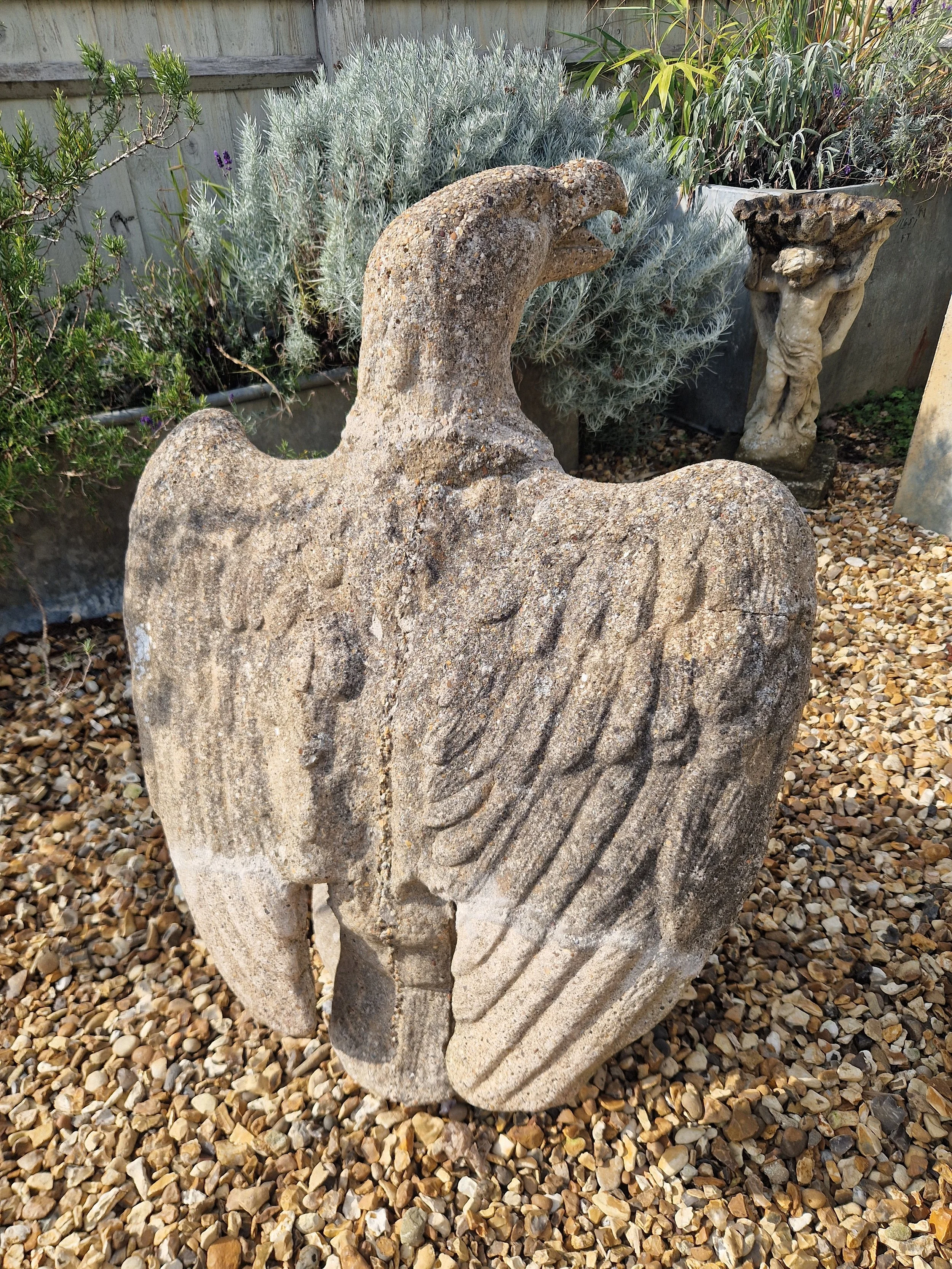
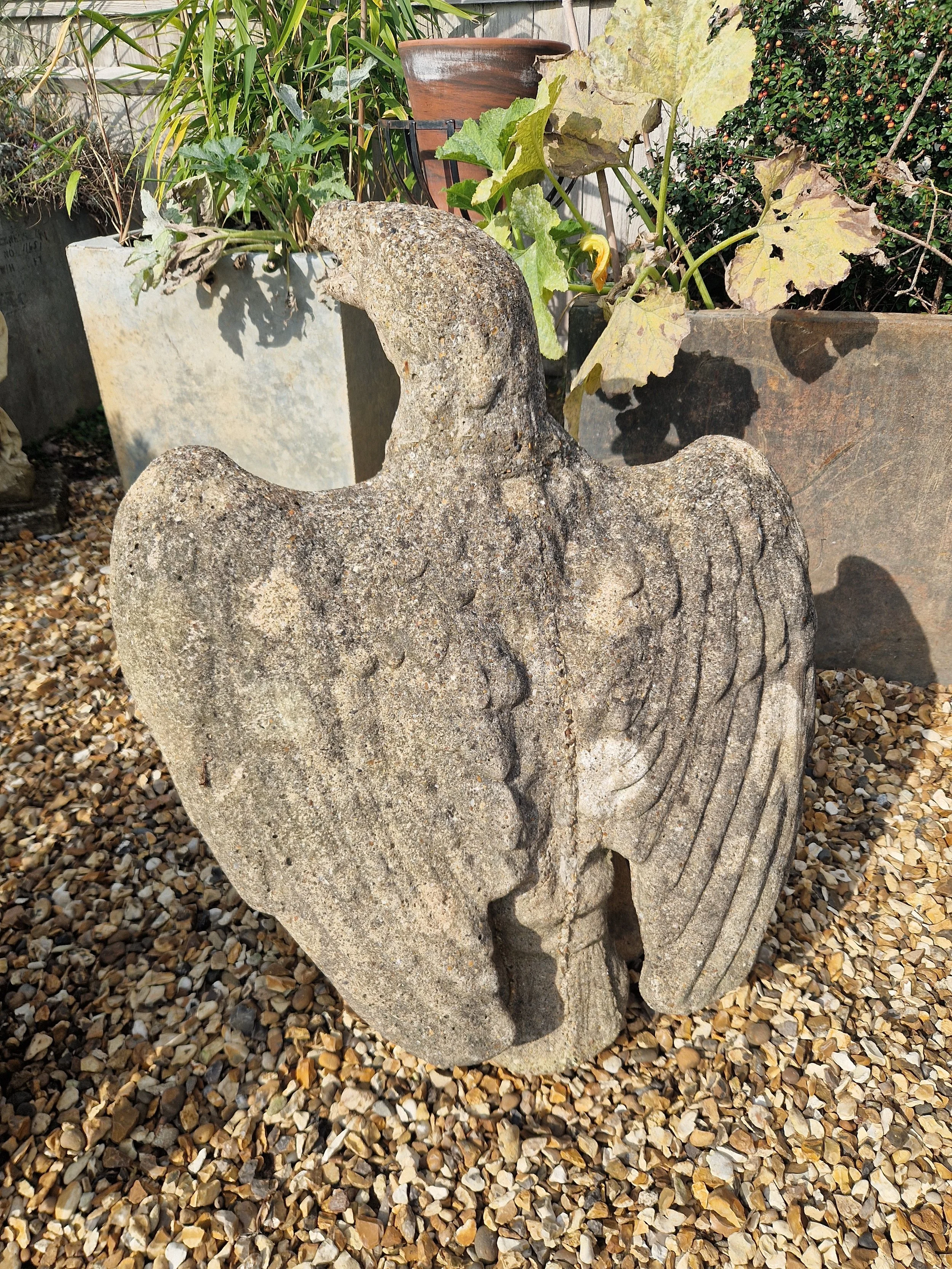
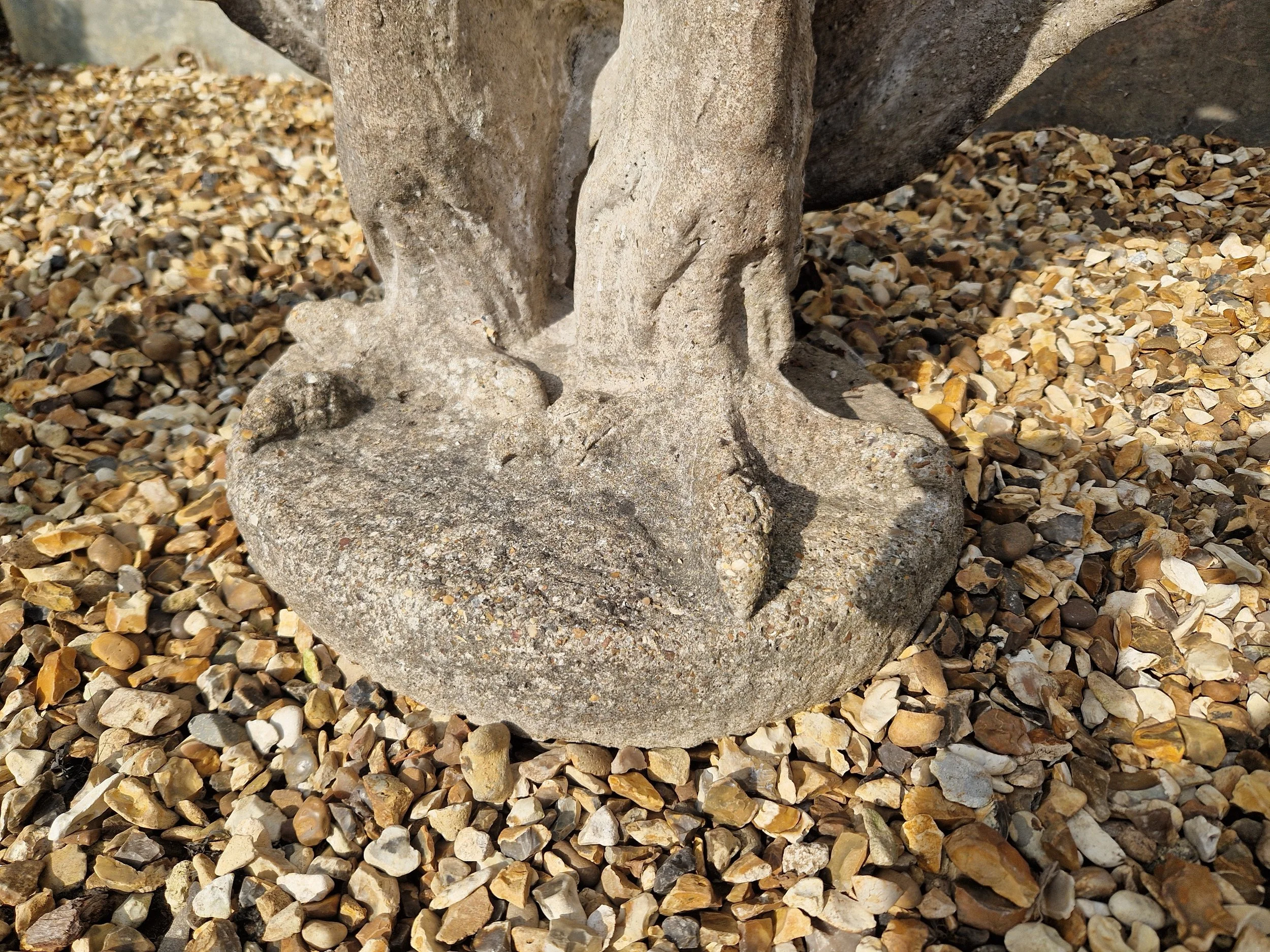
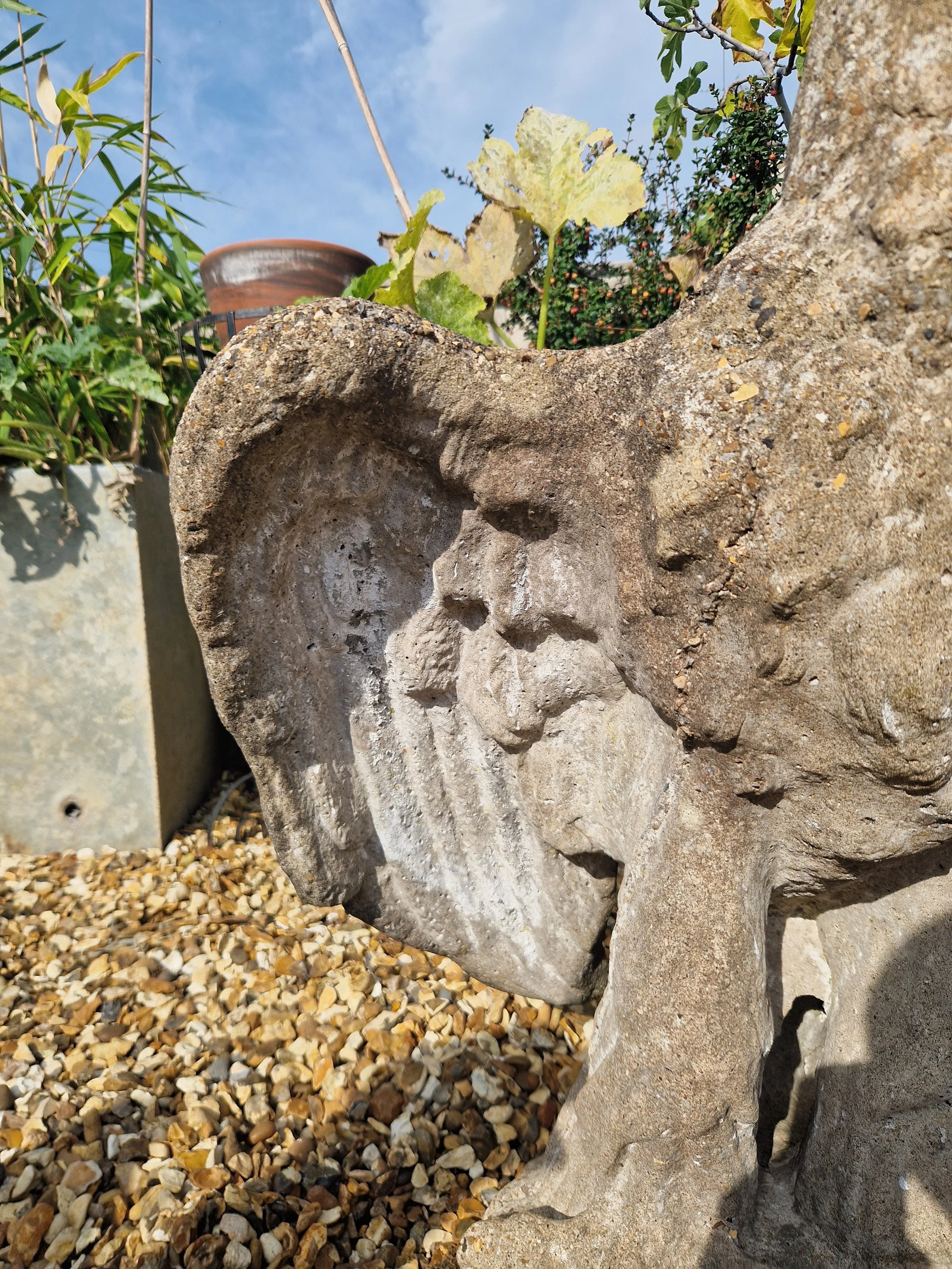
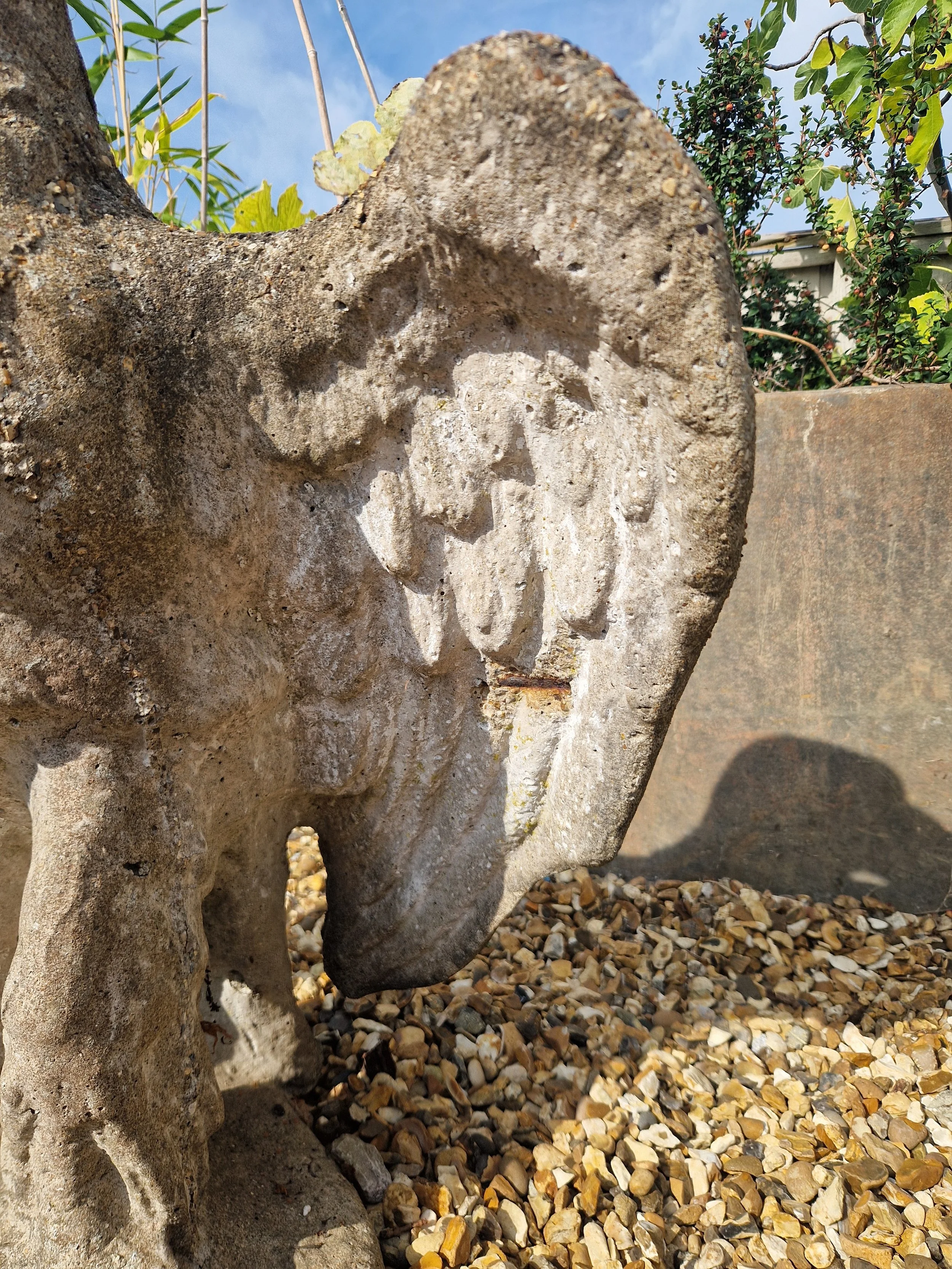
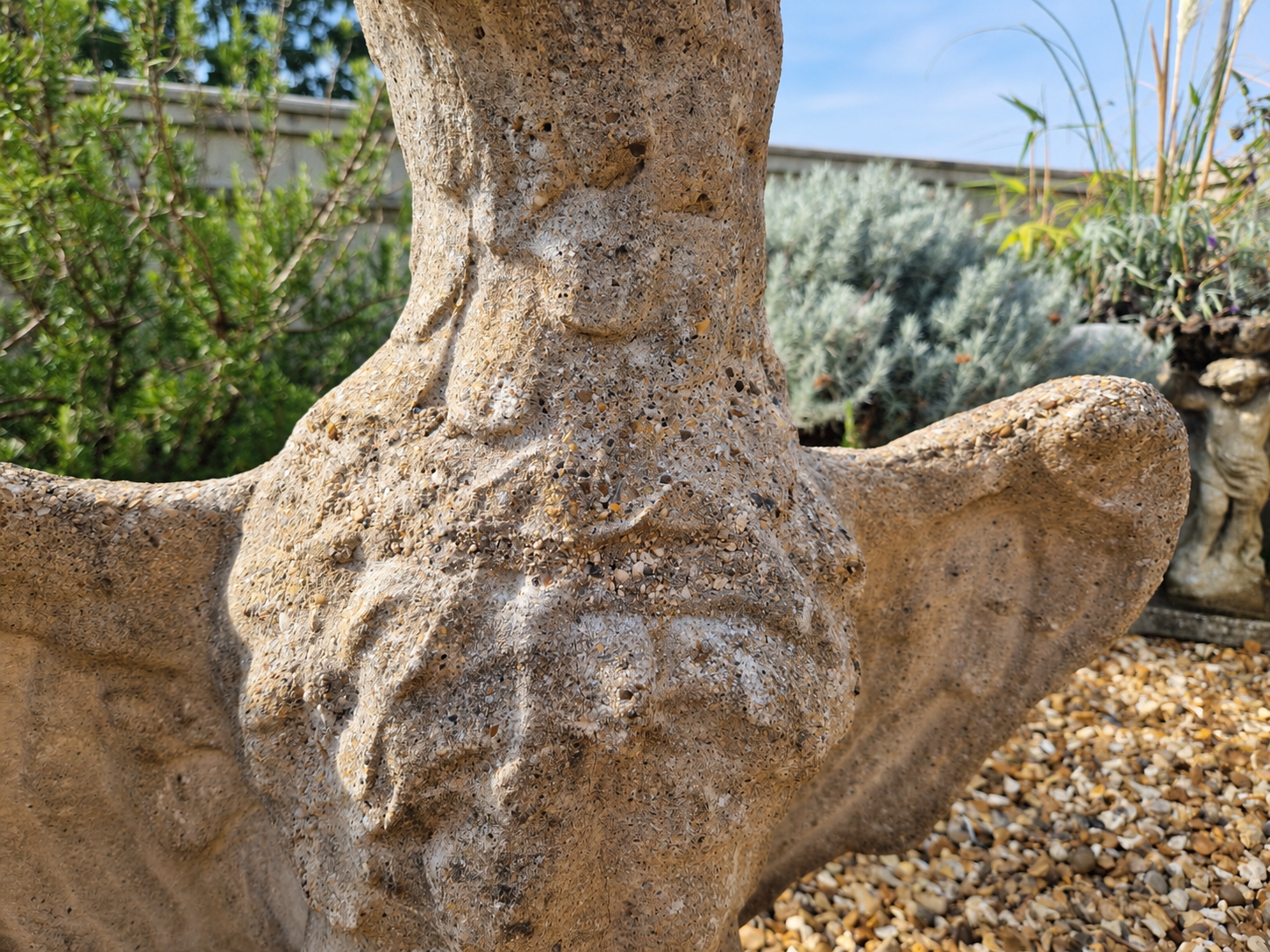
Each eagle is boldly modelled with outstretched wings, an open beak, a prominently feathered breast and powerful talons, standing upon an integral stone base. Their imposing proportions and commanding appearance suggest that they were originally intended as architectural ornaments, possibly for the entrance piers of a substantial country house, estate or formal garden.
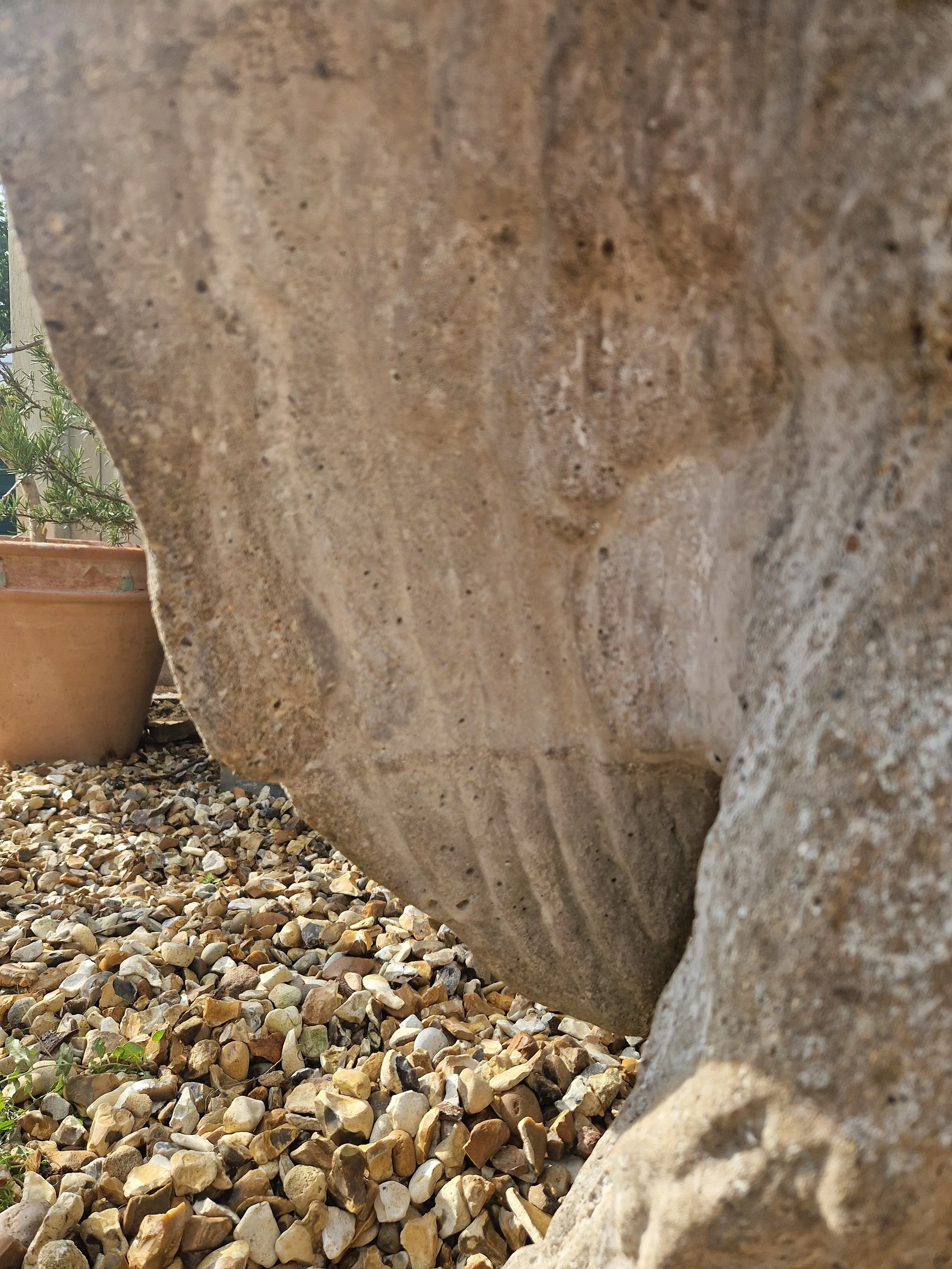
The eagles display extensive natural weathering, with softened feather detailing, surface erosion, lichen staining and an attractive, mature patina acquired through many years of outdoor exposure. This weathering contributes considerably to their character and appearance.
Of particular interest is the original construction of the heads, which were manufactured separately and fitted into the bodies using substantial tapered, square mortise-and-tenon-style joints. This unusual construction is an interesting feature of their manufacture.
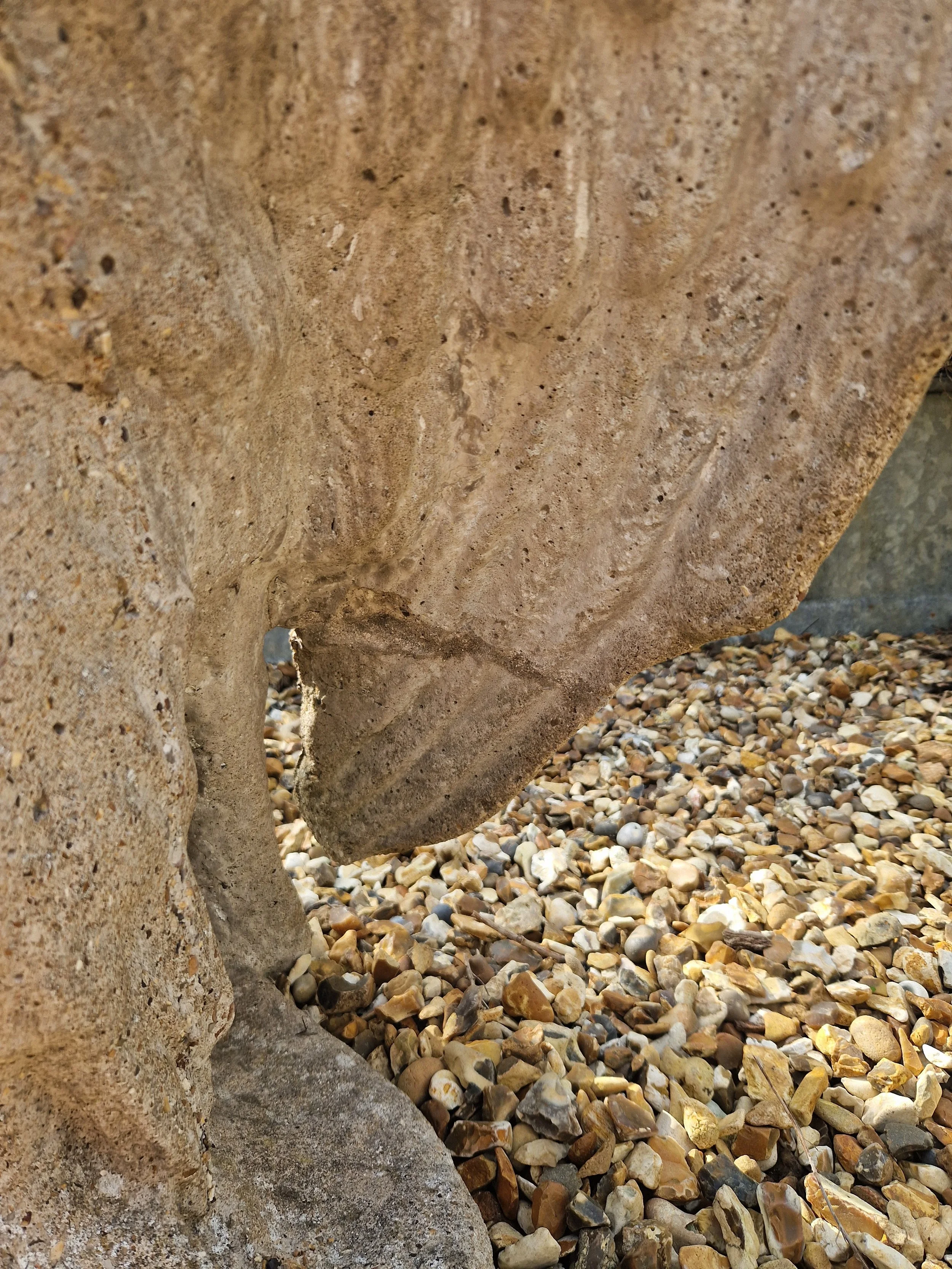
The pair have survived with their original heads and substantial original stone fabric intact. One eagle has undergone sympathetic restoration, including the reattachment of its original head and damaged wing extremities. The original head was refitted into its surviving mechanical joint and secured using modern construction adhesive. The repaired neck junction was carefully colour-matched using finely ground material from the original composition stone.
The restoration has been undertaken with the intention of retaining the maximum amount of original material and preserving the naturally weathered appearance of the sculptures. As with all antique outdoor stonework, evidence of age, erosion, historic damage and restoration should be expected.
The eagles were acquired from Kinghams Auctioneers, Moreton-in-Marsh, Gloucestershire, in January 2023, where they were catalogued as Lot 972, A Pair of Reconstituted Stone Statues, Modelled as Eagles with Outstretched Wings. Original auction photographs documenting the detached head and wing tips of one eagle - the condition before restoration have been retained.
Their design bears a close resemblance to documented examples of 19th-century composition stone eagles associated with Austin & Seeley.
A highly decorative and substantial pair of architectural garden ornaments, particularly suitable for mounting upon entrance gate piers, flanking a driveway or creating a striking focal point within a traditional landscaped garden. Attribution and Historical Research
This substantial pair of nineteenth-century English composition stone eagles is attributed to Austin & Seeley, the celebrated London manufacturers of artificial stone garden and architectural ornament.
The attribution is supported by important contemporary documentary evidence, notably the firm's illustrated 1841 catalogue, Collection of Ornaments at Austin & Seeley's Artificial Stone Works, which includes ornamental eagle designs.
Comparison with the catalogue engravings reveals notable similarities in the overall sculptural treatment and arrangement of the wings, body, feathering and naturalistic form. Although the present eagles have undergone extensive weathering during prolonged outdoor exposure, significant elements of their original modelling remain discernible.
Further evidence is provided by the original construction of the sculptures. Examination of a detached head revealed a separately cast component fitted to the body by a closely fitting, tapered square locating joint.
This is particularly significant in light of Simon Swann's specialist conservation article, Artificial Stone: 19th-century Cementitious Sculpture and Rockwork, published in The Building Conservation Directory in 2017. Swann documents Austin's use of separately cast components and explains how eagle heads could be positioned in different directions to produce matching pairs for architectural gateways.
The article also illustrates a restored Austin eagle displaying striking similarities in the lower body feather pattern, substantial legs, pronounced talons and naturalistic rocky base. The present pair is considerably more weathered, but the surviving underlying modelling provides a compelling comparison.
Taken together, the contemporary catalogue illustrations, surviving sculptural details and characteristic construction provide a strong basis for attribution to Austin & Seeley.
While an exact mould correspondence has not been conclusively established, the evidence supports an attribution to the firm's nineteenth-century production.
Historical references:
Collection of Ornaments at Austin & Seeley's Artificial Stone Works, 1841. A copy is held by the Yale Center for British Art.
Simon Swann, Artificial Stone: 19th-century Cementitious Sculpture and Rockwork, The Building Conservation Directory, 2017.
Dimensions (each, approximately): Height: 82 cm, Width: 72 cm, Depth: 50 cm, Weight: estimated 100 kg each
Condition: Antique weathered condition, with surface erosion, losses and sympathetic restoration as described. Please examine the photographs carefully.
Price breakdown: Pair of Eagles £3650, Courier/Delivery Fee UK MAINLAND ONLY £250
Quisque iaculis facilisis lacinia. Mauris euismod pellentesque tellus sit amet mollis.